


Eye Disease Management
We’re committed to monitoring, managing, and protecting your eye health through expert care, advanced technology, and collaborative treatment approaches.

Why eye disease management matters
Many serious eye conditions develop gradually without noticeable symptoms in their early stages. Regular monitoring and timely intervention can slow progression, prevent irreversible vision loss, and maintain your quality of life. Our role is to detect changes early, track progression carefully over time, and put in place treatment when necessary.
Conditions we monitor and manage
Cataracts
We track the gradual clouding of your eye’s natural lens, monitoring when it begins affecting your daily activities like driving, reading, or recognizing faces. We coordinate surgical referrals at the right time, so you’re not waiting too long.
Glaucoma
Often called the “silent thief of sight,” glaucoma damages the optic nerve, typically without symptoms until significant vision loss has occurred. We monitor eye pressure, optic nerve health, and visual field changes to catch and manage this condition early.
Age-related macular degeneration (AMD)
We detect and monitor changes to your macula, which controls your central vision used for reading, recognizing faces, and detailed work. Early detection of wet AMD can help you access injection treatments that slow progression and preserve sight.
Diabetic retinopathy and diabetic macular edema
For patients with diabetes, regular retinal monitoring is essential and potentially sight-saving. We detect early blood vessel changes, microaneurysms, and swelling before they threaten your vision.
Retinal conditions
We monitor retinal defects, potential detachments, holes, tears, and other abnormalities that require ongoing observation or urgent referral.
Inflammatory eye conditions
Eye inflammation can arise from infections, autoimmune diseases, or unknown causes. We diagnose and manage these conditions, prescribing appropriate medications or referring to specialists when systemic treatment is necessary.
Medication monitoring
Certain medications, particularly Plaquenil (hydroxychloroquine) used for autoimmune conditions like lupus and rheumatoid arthritis, can affect your retina and visual function over time. We perform specialized monitoring to detect any changes early.
Cancer of the eye
While rare, eye cancers and lesions require careful monitoring and prompt referral.
Advanced diagnostic technology
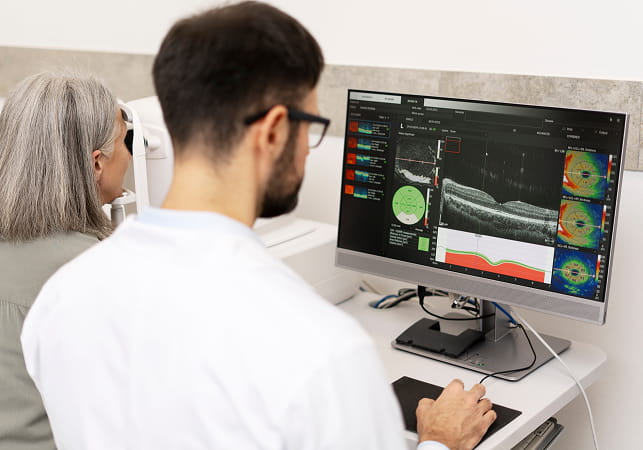
We use cutting-edge tools including optical coherence tomography (OCT) scans that provide cross-sectional images of your retina with microscopic detail, comprehensive retinal imaging to document and track changes over time, and visual field testing to map your peripheral vision and detect subtle losses. This technology enables early detection of minute changes in your eye structure and function that wouldn’t be visible with older examination methods.
Collaborative care
Eye disease management often requires a team approach. We work closely with ophthalmologists for surgical interventions, family physicians to manage systemic health factors, and other specialists including rheumatologists, neurologists, and endocrinologists. When referrals are needed, we facilitate the process and maintain ongoing communication with your care team.

Your partner in eye health
Every management plan is personalized to your unique needs, risk factors, and circumstances. We’ll make sure you understand your condition, including what to look out for and why specific treatments are recommended.
Schedule an eye exam or disease management consultation today.